The Roll: A Boston Jiu Jitsu Battle of Wills
- Akmboh v2
- Mar 24
- 4 min read

Two Perspectives, One Epic Five-Minute War on the Boston Jiu Jitsu Mats
Marcus (Blue Belt, 6 months): The timer beeps and I slap hands with Devon, a purple belt who's been training at this Boston jiu jitsu academy for three years. My heart's already racing. Everyone knows Devon is technical, patient, and absolutely relentless—exactly the kind of training partner who exposes every gap in your game. We grip up and immediately he's pressuring forward, his base impossibly heavy as he drives me backward across the mat. I'm backpedaling, trying to establish my guard, but he's not giving me anything. His hands are everywhere—collar, sleeve, controlling my posture before I can even settle. I pull guard finally, my legs wrapping around his waist, but I can already feel him starting to break my closed guard down. Stay calm. Breathe. This is Boston jiu jitsu—it's supposed to be hard. He stands to pass and I transition to spider guard, my feet in his biceps creating distance. For a moment, I feel like I have control, like maybe I can sweep him. Then his weight shifts subtly and I realize with dawning horror that he's three steps ahead, already setting up his pass while I'm still thinking about my sweep. The battle is on.
Devon (Purple Belt, 3 years): Marcus has improved dramatically in the past few months, and I can feel it the moment we engage. His grips are stronger, more purposeful than they used to be. I drive forward to establish top pressure—a fundamental principle we drill constantly at our Boston jiu jitsu academy—and he's defending well, not panicking like newer students do. He pulls closed guard and I feel his legs lock tight around my waist. Good, I think. Let's see how he handles the standing pass. I posture up, break his guard, and immediately he transitions to spider guard, feet pressing into my biceps. Smart. Six months ago he would have just let me pass. But I've been here before, thousands of times. I feint left, feel him commit his weight to defend that side, then explosively circle right. His hook is a fraction of a second too slow coming off my arm and I'm diving into headquarters position, my shoulder driving into his sternum. He frames against my shoulder with his forearm—excellent defensive awareness—but I'm already swimming my hand under his leg, looking for the knee slice. This is the chess match I love about jiu jitsu. He's thinking, I'm thinking, and the better strategist wins.
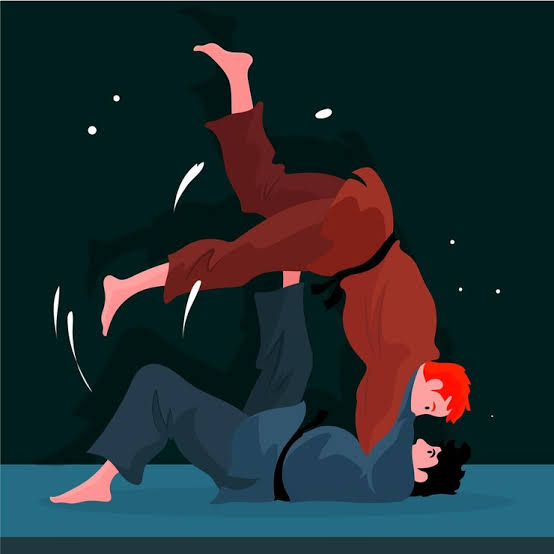
Marcus: Panic flares as Devon starts passing—his shoulder is crushing my chest and I can barely breathe. Don't give up the pass, don't give up the pass. I frame hard against his shoulder, creating just enough space to shrimp my hips away and get my knee inside. My instructor's voice echoes in my head from countless Boston jiu jitsu classes: "The fight isn't over until you tap or time runs out." I recover half guard and for a moment feel a surge of hope—I didn't let him pass! But Devon doesn't even pause. He immediately starts attacking my half guard, his crossface grinding against my jaw, his weight making me feel like I'm drowning on dry land. My left arm is trapped, and I can feel him setting up the transition to mount. No, no, no. I buck my hips desperately and manage to create a tiny bit of space—just enough to free my arm and get an underhook. Now we're in a battle of grips and leverage. My underhook versus his crossface. My legs fighting to retain half guard versus his knee cutting through. Every muscle in my body is screaming and we're only two minutes into this round. I hear my teammates on the sidelines calling out encouragement, and something clicks—I stop defending passively and start attacking. I bridge explosively, sweep him off balance just slightly, and suddenly—impossibly—I'm on top.

Devon: The sweep catches me off-guard and suddenly Marcus is in my half guard, his first time on top this entire round. I feel a flash of respect—that was a perfectly timed bridge-and-roll, the kind of technique that only works when you commit completely. The Boston jiu jitsu fundamentals we drill endlessly are showing in his game. But I'm far from done. From bottom half guard I immediately start working for the underhook, but he's heavy on top, using his weight intelligently instead of just muscling me. He's learning. I transition to deep half guard, inverting my body to off-balance him, and I can feel his base wavering. One more technical movement and I'll sweep him back. But then something unexpected happens—instead of fighting the sweep, Marcus flows with it, almost gives it to me, but as I come up he's already transitioning, his legs wrapping around my back, his arms snaking around my neck. He's going for a guillotine choke. It's not fully locked in yet but the attempt is there, the ambition is there, and for a split second I see the blue belt he is now and the purple belt he's going to become. I tuck my chin, hand fight my way out of the choke, and as the timer beeps ending our round, we both sit back breathing hard, covered in sweat, and tap fists. "Good roll," I tell him, and I mean it. "That sweep-to-guillotine transition was slick—you're getting dangerous." Marcus grins, exhausted but proud, and in that moment we both understand what makes Boston jiu jitsu special: it's not about domination, it's about two people pushing each other to be better, one five-minute battle at a time.


Comments